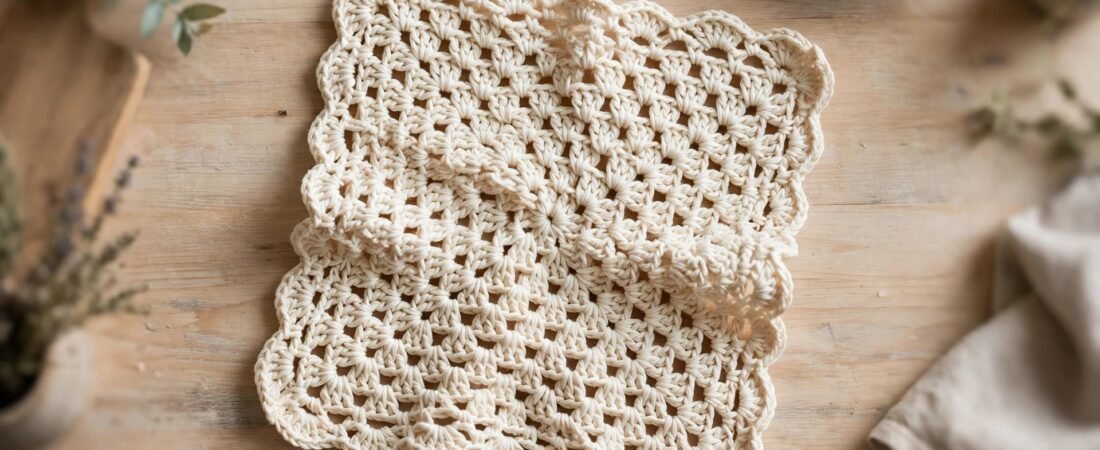
Crochet Dishcloth Pattern (Easy Cotton Washcloth)
If you want an easy crochet dishcloth pattern that builds real skill while you make something your kitchen actually needs, this simple cotton washcloth is the perfect next project. A classic crochet dishcloth is worked in nothing but single crochet rows: one foundation chain, one row of stitches repeated, and a neat edging round to finish. There is no shaping, no counting trick rounds and no complicated stitch combinations, so most beginners finish their first dishcloth in an evening and end up with a thick, absorbent cloth that is genuinely useful.
Already comfortable working flat? Try our Easy Crochet Coaster Pattern for Beginners next, and explore more kitchen makes in our Kitchen & Bath Crochet category. If you are brand new to crochet, start with our Easy Crochet Granny Square Pattern for Beginners to learn the basic stitches first.
Why You Will Love This Crochet Dishcloth Pattern
Dishcloths are the ideal beginner project because every single row is exactly the same: chain one, turn, single crochet in every stitch. That repetition is not boring, it is training. By the time you finish, your tension will be noticeably more even than when you started, your edges will be straighter, and you will be able to spot a missed stitch instantly.
They are practical too. Cotton dishcloths are thick, absorbent and washable, and they beat disposable sponges in every way. A small stack of handmade dishcloths tied with twine makes a thoughtful housewarming gift, and because one cloth uses very little yarn, they are perfect for using up leftover cotton from bigger projects.
Materials and Tools
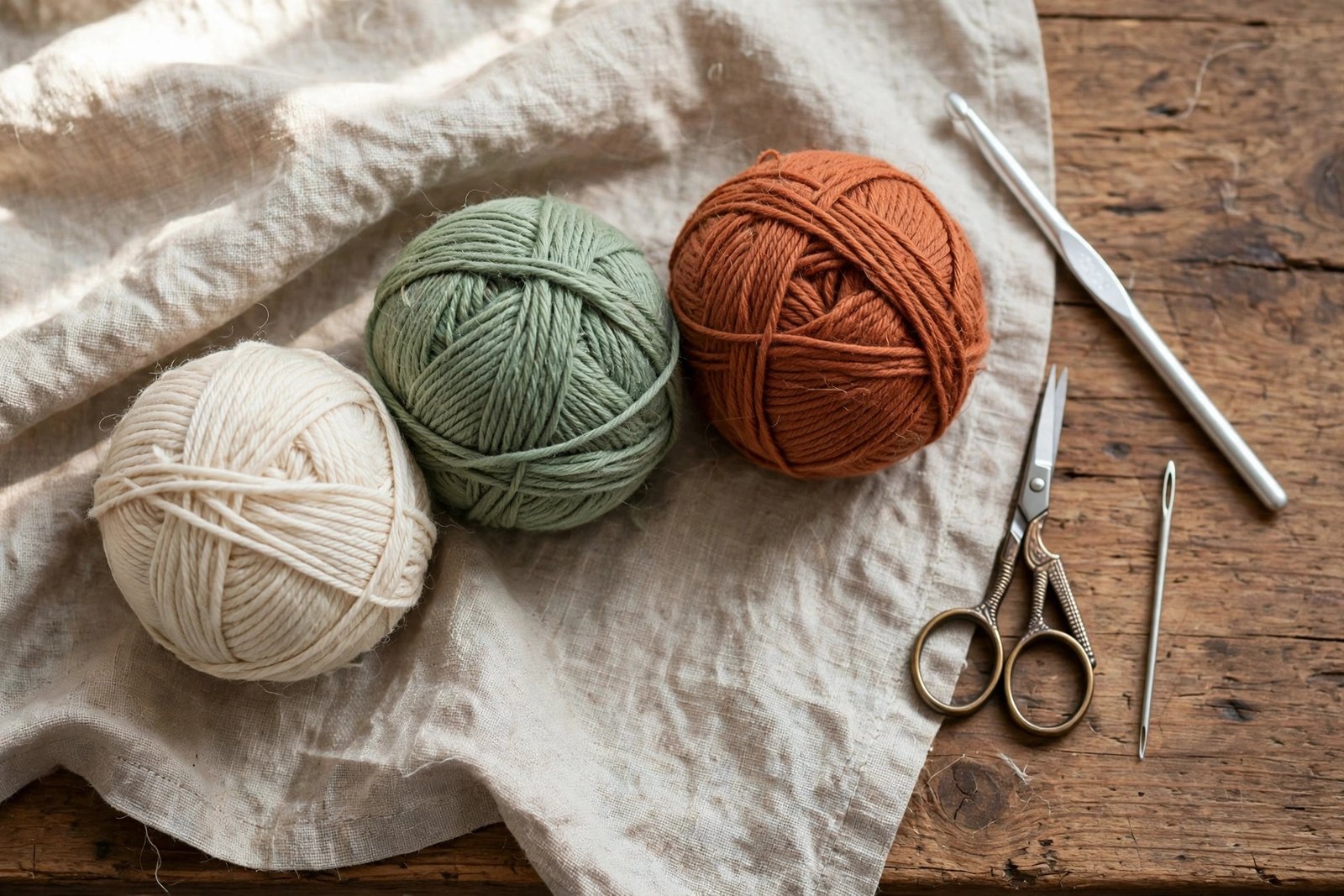
- Worsted weight (medium, size 4) 100% cotton yarn. Cotton is essential for dishcloths: it is absorbent, durable in the wash and holds up to scrubbing. Do not use acrylic, which does not absorb water.
- 5.0 mm (US H-8) crochet hook.
- Yarn needle with a large eye, for weaving in ends.
- Small scissors.
- Stitch markers (optional), to mark the first and last stitch of a row.
For your first dishcloth, choose a light or medium solid colour of cotton. It makes it easy to see each stitch as you work, and single crochet texture looks best in a yarn with no variegation hiding the rows.
Finished Size and Gauge Notes
With worsted cotton yarn and a 5.0 mm hook, the finished dishcloth measures approximately 8 inches wide and 7 inches tall (about 20 x 18 cm), a generous everyday size for dishes, counters and hands. Your cloth may finish slightly larger or smaller depending on your tension, and that is perfectly fine for a washcloth.
Gauge is not critical for this project, but as a guide, 15 single crochet stitches measure about 4 inches (10 cm). What matters most is that the cloth lies flat and the edges stay straight, which the edging round takes care of at the end.
US Crochet Abbreviations
- ch – chain
- sc – single crochet
- sl st – slip stitch
- st – stitch
- rep – repeat
- * – repeat from this point as directed
This pattern uses US terms throughout. In UK terms, a US single crochet is called a double crochet.
Step-by-Step: Crochet Dishcloth in Rows
Work in rows, turning your work at the end of every row. Count your stitches at the end of Row 1 and again after a few rows: every row must have exactly 30 single crochet. Losing or gaining a stitch is the most common beginner mistake, and catching it early keeps the edges straight.
Foundation Chain and Row 1
Chain 31. Single crochet in the 2nd chain from the hook, then single crochet in each chain across. Stitch count: 30 single crochet. Turn your work.
Rows 2 to 34: Building the Body
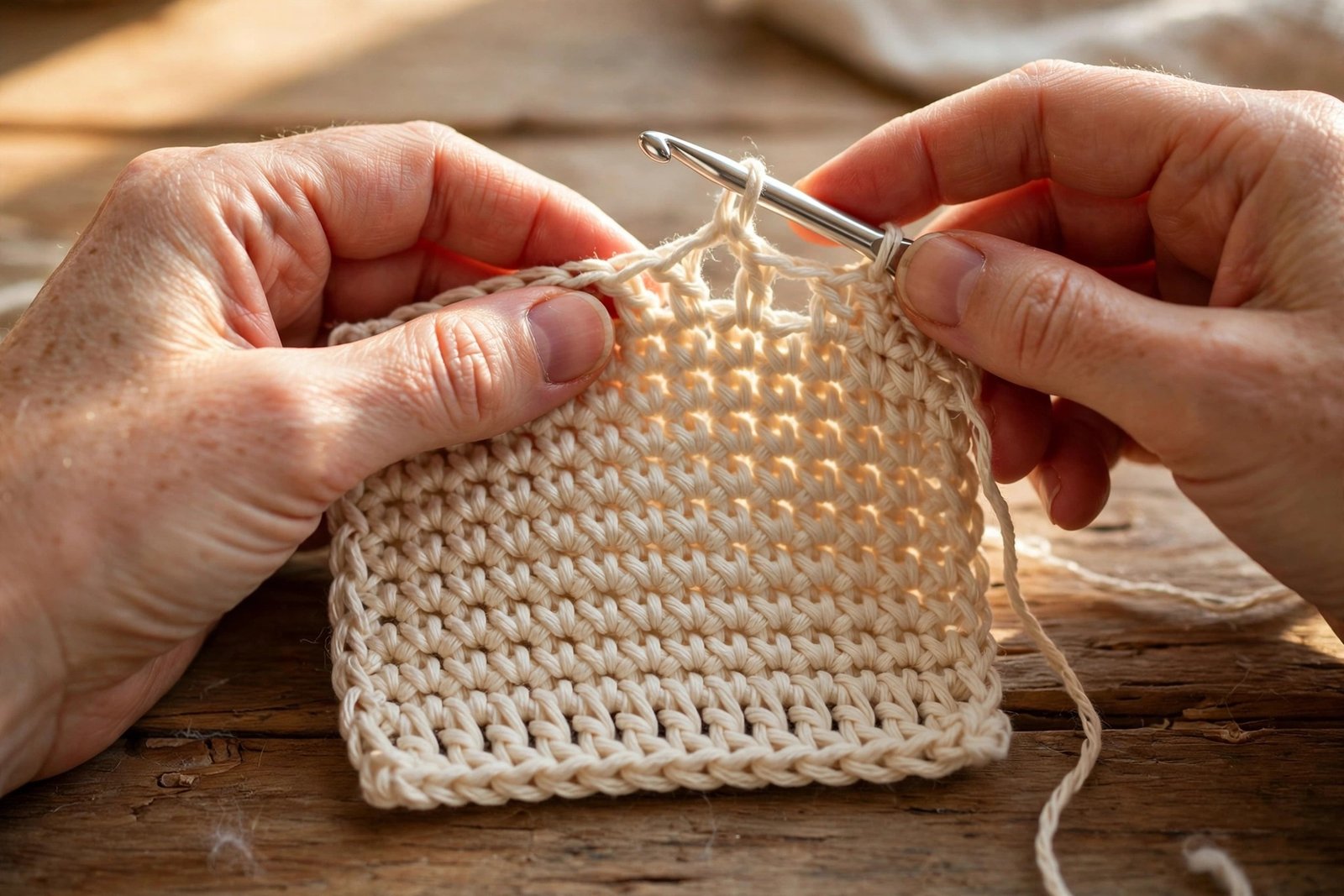
Chain 1 (does not count as a stitch), turn, single crochet in each stitch across. Stitch count: 30 single crochet in every row. Repeat this row until you have worked a total of 34 rows, counting the foundation row as Row 1. The cloth should now look like a neat rectangle about 8 inches wide and just under 7 inches tall.
If you placed markers in the first and last stitch of Row 2, move them up every few rows: they make it easy to find the last stitch of the row, which is the one beginners most often skip.
The Neat Edging Round
After Row 34, chain 1 but do not turn. You are now working around the outside edge of the rectangle. Single crochet evenly around the entire cloth: single crochet in each stitch across the top edge (30 stitches), work 3 single crochet into the corner, single crochet down the side working 1 stitch into the end of each row (34 stitches), work 3 single crochet into the corner, single crochet across the bottom edge (30 stitches), work 3 single crochet into the corner, single crochet up the other side (34 stitches), work 3 single crochet into the corner, slip stitch to the first single crochet to join. Stitch count: approximately 140 single crochet around the edge. Fasten off and weave in the ends.
The 3 stitches in each corner keep the corners square and flat instead of pulling them in. Work the side stitches loosely so the edge does not pucker.
Tips for the Perfect Crochet Dishcloth
Use Cotton, Not Acrylic
This is the one rule that matters. Acrylic yarn looks fine on the shelf, but it does not absorb water, so an acrylic dishcloth just pushes water around the counter. Cotton absorbs, scrubs gently and survives hundreds of wash cycles.
Keep the Edges Straight
Wavy edges almost always mean the stitch count changed. Count to 30 at the end of every row for the first few rows; once your hands learn the rhythm, check every four or five rows. The chain-1 turning chain is the usual culprit when a stitch goes missing, because beginners accidentally work into it as if it were a stitch.
Weave Ends In Securely
Dishcloths get washed hard, so ends must be locked in. Thread the tail through a yarn needle and weave it back and forth through the backs of the stitches for at least two inches, changing direction once. Trim close to the fabric.
Block Lightly for a Crisp Finish
Soak the finished cloth in cool water, squeeze it gently, lay it flat and shape it into a neat rectangle with your fingers, then let it dry. Cotton relaxes into a perfectly even shape and the edging sits beautifully flat.
5 Ways to Use and Gift Crochet Dishcloths
- Everyday dish duty: thick single crochet texture scrubs plates and wipes counters better than any sponge.
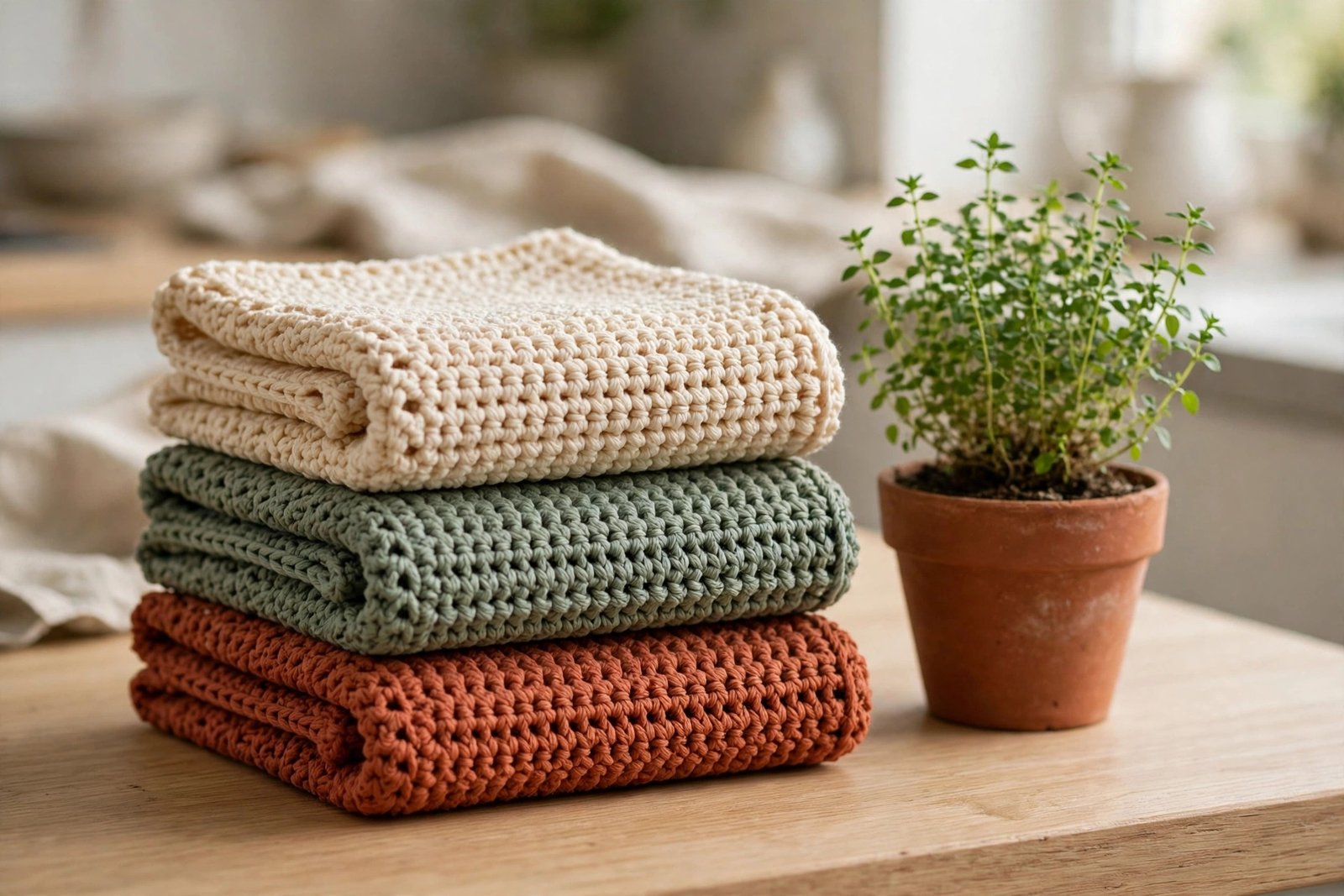
- Housewarming gift sets: make three or four in matching colours, fold them neatly and tie with twine or ribbon.
- Face and hand cloths: work the same pattern in a soft, light-coloured cotton for gentle washcloths.
- Scrap-busting stripes: change colour every 6 rows for cheerful striped cloths that use up leftover cotton.
- Market and craft fair stock: dishcloths are quick to make, cheap in materials and always sell, which makes them perfect small-batch items.
Frequently Asked Questions
Why are the edges of my dishcloth wavy or uneven?
Uneven edges mean your stitch count changed from row to row. Count your stitches: every row must have exactly 30 single crochet. The most common cause is skipping the last stitch of the row or accidentally working into the turning chain.
What is the best yarn for a crochet dishcloth?
Worsted weight 100% cotton is the best choice. It is absorbent, sturdy and machine washable. Avoid acrylic and wool: acrylic does not absorb water and wool can felt in hot water.
How big should a crochet dishcloth be?
Around 7 to 9 inches square is the standard everyday size. This pattern finishes at about 8 x 7 inches, which is comfortable to hold and big enough for dishes and counters.
Can I make the dishcloth bigger or smaller?
Yes. Add or remove chains from the foundation in any number you like, then work the same number of single crochet in each row. For a taller cloth, simply work more than 34 rows before the edging round.
How do I wash crochet dishcloths?
Machine wash warm with your regular laundry and tumble dry or lay flat. Cotton dishcloths get softer and more absorbent with every wash, and they last for years.
Get the Free PDF and Visit Our Shop
Download this pattern as a free printable PDF here: Download the free Crochet Dishcloth Pattern PDF.
Ready for a bigger project? Visit our OZ Crochet Patterns Etsy shop and save 50 percent with the code OZCROCHETSALE. A wonderful next make is our Alpine Blanket Crochet Pattern, an easy textured throw that grows from the same simple stitches. Learn more about our designer on our About Us page. Happy crocheting!